Three stages where a physical kit converts prospective students into enrolments
Home / Blog / Three stages where a physical kit converts prospective students into enrolments
Introduction
Most universities invest heavily in attracting enquiries. Very few invest in converting them. Here’s how a well-timed, well-designed kit changes that.
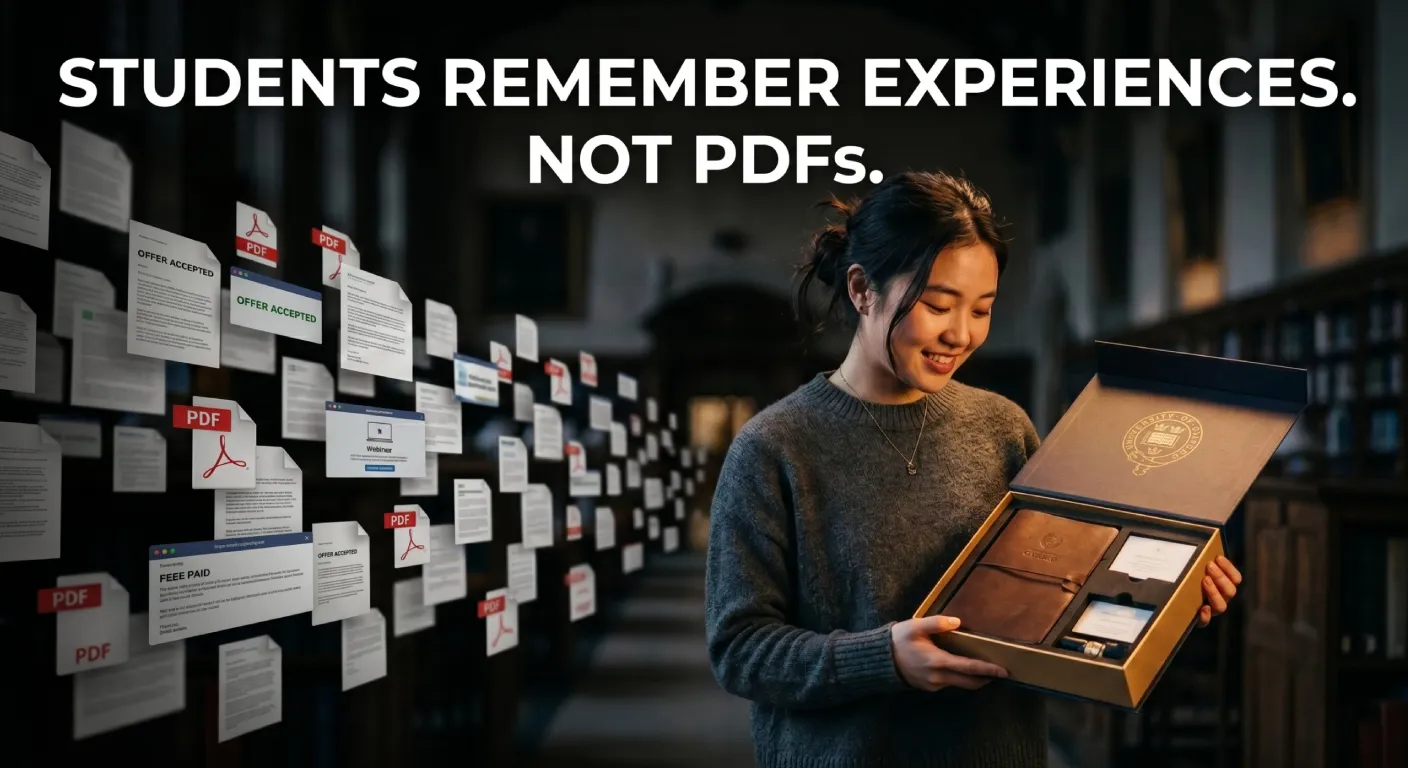
Consider the journey a prospective student takes. They attend a webinar, visit a fair, or sit through an agent session. They leave with a dozen tabs open, a handful of brochures they’ll probably recycle, and — if they remember — a PDF they’ll never open again.
The university they ultimately enrol with may not be the one that impressed them most in that first session. It’s almost always the one that stayed with them longest afterwards.
Physical, branded kits give you three distinct windows to do exactly that — one at each stage of the student’s decision journey.
The three stages
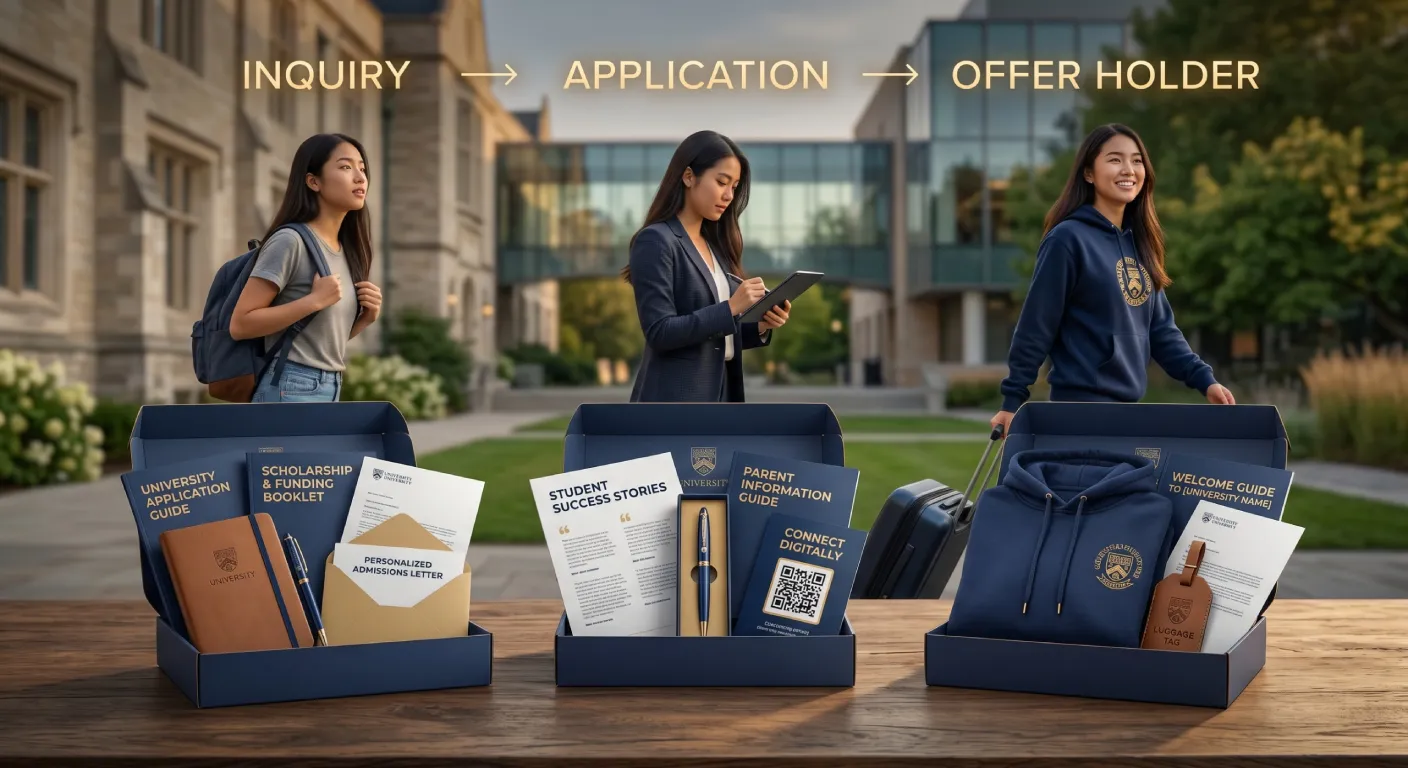
Stage 1 — Inquiry: the student has shown interest (attended a fair, webinar, or agent session) but hasn’t applied yet.
Stage 2 — Application: the student has submitted an application. Engagement here reduces the risk of drop-off before a decision is made.
Stage 3 — Offer holder: the student holds an admission offer and is weighing up where to go. This is where physical engagement has the highest ROI.
Stage 1 — Moving from curiosity to commitment
A student who attends a webinar or university fair is curious, not committed. At this stage, the university’s job is to deepen that curiosity into intent — to make the student feel that applying is the natural next step, not a leap of faith.
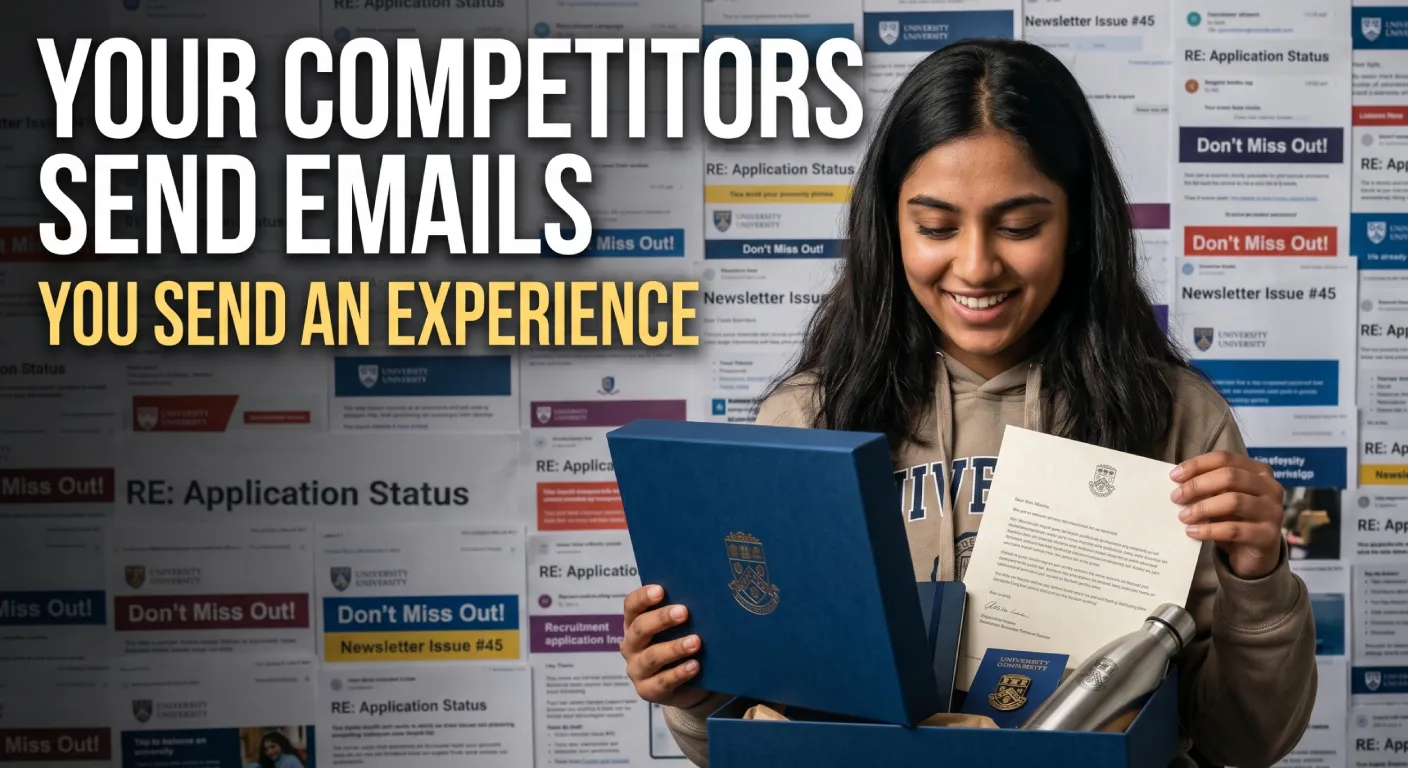
Email follow-ups are the default play, but they compete with dozens of other institutions sending identical campaigns. A physical conversion kit, arriving at the student’s home within days of the event, is materially different.
STAGE 1 KIT CONTENTS
Application checklist
Programme guide
Scholarship summary
Branded notebook
Personal message from admissions
“The notebook alone is worth it — it sits on the student’s desk for months. Your logo is in the room every time they do their homework.”
The personal message from admissions is the element most universities underestimate. A handwritten or printed note addressed by name — even a brief one — is something a student is unlikely to throw away. It signals that the university sees them as an individual, not a conversion metric.
Stage 2 — Preventing the quiet drop-off
Application drop-off is a silent epidemic in international student recruitment. A student submits and then — waits. In that waiting period, doubt creeps in. Other universities send offers. Friends make different choices. The gap between application and decision is where you lose people.
A Stage 2 kit acknowledges the student’s action and keeps your university emotionally present during the wait.
STAGE 2 KIT CONTENTS
Thank-you card
University pen
Student success stories
QR-linked ambassador videos
Parent guide
The parent guide is a strategic inclusion. In most international student markets — particularly South Asia and Southeast Asia — parents are co-decision-makers. Material that speaks directly to them (about safety, career outcomes, support services) dramatically increases household buy-in and reduces the chance a student withdraws after family pressure.
Stage 3 — Turning an offer into an enrolment
This is the stage where physical engagement earns its highest return. An offer holder has already chosen your university intellectually. The Stage 3 kit makes that choice feel real — it makes them feel like they already belong.
STAGE 3 KIT CONTENTS
Welcome letter
Premium hoodie or t-shirt
Luggage tag
Welcome guide
Accommodation information
Parent booklet
The hoodie and luggage tag are not merchandise. They are identity objects. When a student wears a university hoodie before they’ve even enrolled, they have psychologically committed. The luggage tag is a daily reminder that they’re going somewhere — and it’s going with them.
Higher recall vs digital-only campaigns
0x
Keep physical mail longer than a week
0%
Highest ROI of all three stages
Stage 0
Why universities don't do this already
The honest answer: it feels complicated. Sourcing, printing, packaging, and shipping branded kits to hundreds of students across multiple countries requires vendor management, quality control, and fulfilment infrastructure that most in-house teams don’t have.
That’s exactly the problem Hue Marcom solves. We manage everything — design, production, packing, and dispatch — so your admissions team focuses on students, not logistics.
Ready to build your conversion kit?
We’ll put together a sample concept matched to your stage and student profile.