Introduction
A beautifully packaged gift that sits unused says less about your company than a plain box your employees actually reach for.
It’s easy to confuse a gift that photographs well with a gift that lands well. A gold-foil box with an elaborate ribbon gets a good unboxing reaction in the moment — and then, for a large share of recipients, gets opened once, appreciated, and set aside. The packaging did its job in the first ten seconds. The product inside is what determines whether the gift is remembered in March.
The Packaging Trap
It’s not that presentation doesn’t matter — it clearly does, and premium presentation and quality are consistently cited as more impactful than quantity in how a gift is received. The trap is treating presentation as the finish line instead of the wrapper. An elaborate box around a low-utility item still reads, eventually, as a low-utility item — just a more expensive-looking one.
What 'Usable' Actually Means in a Diwali Gifting Brief
Usability isn’t a single attribute — it’s really four questions worth asking about any gift before it goes into a brief:
- Will this get used more than once, or is it a one-time consumable that’s forgotten within a week?
- Does it work for the household, not just the individual employee — since most Diwali gifts go home?
- Is it something the recipient would have reasonable choice over, rather than a fixed item that may not fit their needs?
Does it hold up outside the festive context — will it still be useful, or even visible, in February?
The Frontline and Factory Workforce Makes This Especially Clear
Nowhere is the usability argument sharper than in gifting for frontline and factory employees, where practical household items — blankets, home furnishings, cookware, and food boxes — tend to extend a gift’s value well beyond the individual recipient and into the household. For a workforce that may not attend every town hall or read every internal email, a genuinely useful Diwali gift is one of the few moments of recognition that reaches everyone equally, regardless of role or location.
Employee vs. Client Gifting: Usability Weighs Differently
It’s worth separating employee gifting from client gifting here, because the usability calculus isn’t identical. Current guidance suggests employee gifts should feel inclusive and personal — signaling that the organization values its people — while client gifts are expected to signal thoughtfulness and premium positioning without appearing transactional. That’s a useful distinction: a client hamper can lean harder into presentation as a brand signal, but an employee gift that prioritizes polish over practicality risks feeling like it was chosen for how it looks in a group photo, not for the person receiving it.
A Simple Usability Test Before You Finalize a Gift
| Question | Low-Usability Signal | High-Usability Signal |
| Will it be used again? | Decorative item, single-use consumable | Everyday item, reusable, functional |
| Does it serve the household? | Individual-only (e.g. a desk item) | Shared use (e.g. cookware, food, home goods) |
| Is there recipient choice? | One fixed item for everyone | A curated set the employee selects from |
| Does it hold up past the festival? | Diwali-themed only, seasonal | Useful in any month of the year |
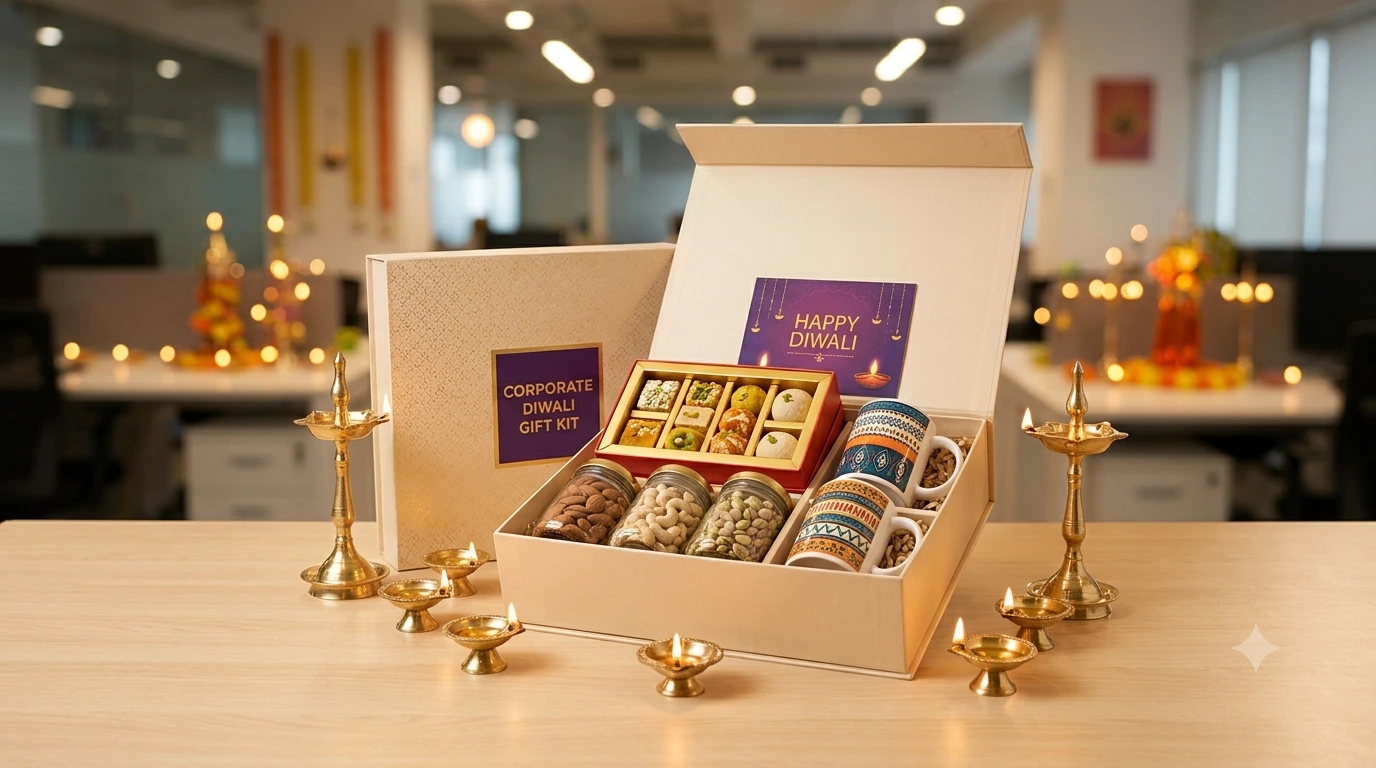
This Doesn't Mean Cutting Corners on Presentation
The point isn’t to strip packaging down to a plain courier bag — a gift still needs to feel considered when it’s opened. The point is sequencing: choose the product for its usability first, and design the presentation around that product, rather than choosing an impressive box and filling it with whatever fits.
Frequently Asked Questions
Doesn't presentation matter for brand perception?
Yes — packaging still carries brand signal and shouldn’t be an afterthought. The distinction is sequencing: pick a genuinely useful product first, then invest presentation budget into that product, rather than letting an impressive box compensate for a low-utility item inside it.
What's the easiest way to raise usability without a full program redesign?
Start by auditing this year’s shortlist against the four-question test above, and swap out any purely decorative or single-use items for household or everyday-use alternatives in the same budget band.